

If you’ve read our guide on how long a roof lasts, you already know the general answer: anywhere from about 15 years to well over 100 years. That’s a wide range, and it exists because roof lifespan depends on the materials, the quality of the original installation, and how consistently the roof is maintained over the years.
This guide compares roofing material lifespan side by side for the most common roof types, explains the realistic life expectancy of each, and covers why two roofs built from the identical product can age very differently.
Quick Answer: Roofing Material Lifespan at a Glance
Here’s a comparison of common roof types. Treat these numbers as typical ranges, not promises.
| Roofing Material | Typical Lifespan |
|---|---|
| 3-tab asphalt shingles | 15 to 20 years |
| Architectural asphalt shingles | 25 to 30 years |
| Designer shingles | 30 to 50 years |
| Flat roofing (TPO, PVC, torch down) | 15 to 30 years |
| Wood shingles and shakes | 20 to 40 years |
| Metal roofs (standing seam) | 40 to 70 years |
| Concrete tiles | 40 to 75 years |
| Clay tiles | 50 to 100+ years |
| Slate roofing | 75 to 100+ years |
These ranges generally line up with industry references like the InterNACHI life expectancy chart, adjusted for what we typically see on residential properties in the wet Pacific Northwest. However, our Malarkey Vista AR is an architectural shingle we sell with a 50-year non-prorated warranty at no additional cost.
Why Roofing Material Lifespan Isn’t a Guarantee
A manufacturer’s label might advertise 30 years or even 50 years, but that number describes the material under ideal conditions rather than your particular house, with its shade, moss, overhanging trees, and months of steady rain. A roof also functions as a complete system, so inadequate underlayment, damaged flashing, or poor attic ventilation will shorten the life of even a premium surface material. That’s why installation quality and ongoing maintenance matter just as much as the product you ultimately choose.
Asphalt Shingles: The Most Common Choice in Portland
Asphalt shingles cover the majority of Portland homes because they’re affordable, relatively easy to repair, and available in a variety of colors and styles. How long they last will depend on the type you install.
3-tab shingles are thin, flat, and economical, and they usually last 15 to 20 years.
Architectural shingles are thicker and layered for improved wind resistance, so most last 25 to 30 years.
Designer shingles are the heaviest option and can reach 30 to 50 years with consistent care. Compare options on our composite shingles and designer shingles pages.
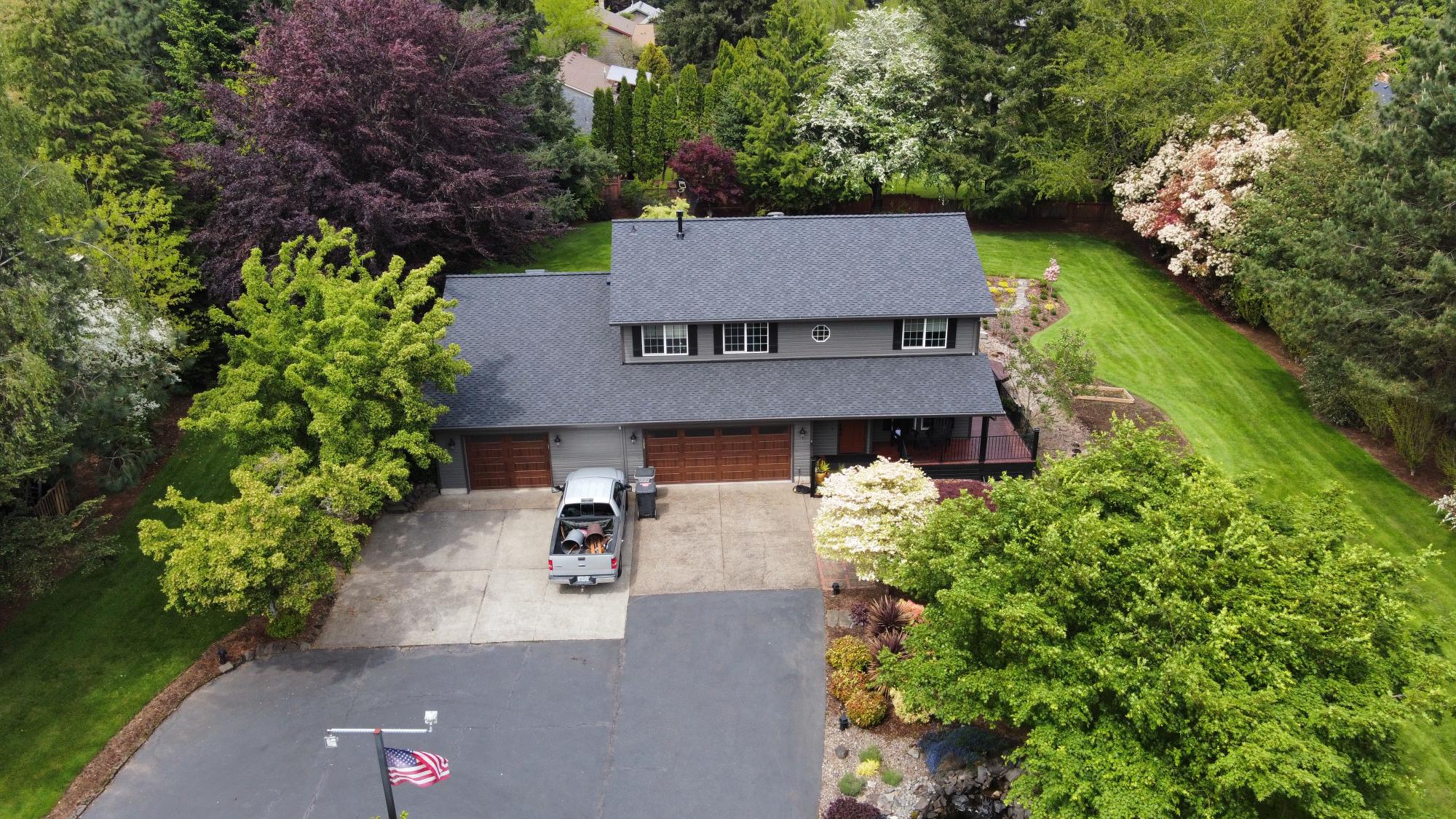 Why lifespan varies: In our climate, moss is the biggest threat because it holds moisture against the shingles and gradually lifts their edges, which is why routine moss removal makes a noticeable difference. Inadequate attic ventilation also traps heat and humidity that deteriorate shingles from underneath.
Metal Roofs: Built for a Rainy Pacific Northwest Climate
 Metal roofs are one of the most durable options for a rainy climate, since water sheds quickly, moss has difficulty taking hold, and the panels don’t absorb moisture. A professionally installed standing seam metal roof usually lasts 40 to 70 years.
Why lifespan varies: The painted coating protects the steel from rust, so scratches from foot traffic or falling debris can eventually lead to corrosion. Exposed-fastener panels typically land on the lower end of the range because the rubber washers on each screw deteriorate and need periodic attention.
Metal costs more upfront, but many homeowners consider it a long term investment because it can eliminate one or even two roof replacements over the life of the house.
Wood Shingles and Shakes: A Pacific Northwest Favorite That Needs Care
A wood roof has a warm, natural appearance that many Northwest homeowners love, and cedar is the most popular choice because it naturally resists rot and insects. Wood shingles are sawn smooth and relatively thin, so they typically last 20 to 30 years, while wood shakes are thicker and split by hand or machine, which helps them reach 30 to 40 years.
Why lifespan varies: Moisture is the deciding factor for any wood roof. Cedar that stays damp under trees can rot, cup, or split well ahead of schedule, occasionally in under 20 years, but regularly trimming branches, clearing debris, and treating the wood every few years can add considerable life.
Clay and Concrete Tiles: Heavy and Long-Lasting
Clay tiles often last 50 to 100 years, and some well-made roofs last considerably longer. Concrete tiles are more affordable and usually last 40 to 75 years.
Why lifespan varies: The tiles themselves may outlast you, but the underlayment beneath them frequently needs replacing after 20 to 30 years. Tiles can crack when people walk on them, and concrete is porous enough to develop moss in shady areas. Weight is the other significant consideration, since many homes require additional structural support before tile can be installed safely.
Slate Roofing: The Longest-Lasting Option
Slate roofing is natural stone, and it’s well known for lasting 100 years or more. Hard slate can last well beyond a century, while soft slate usually falls in the 75 to 100-year range. According to the National Park Service, slate lifespan varies depending on the type of stone, the roof’s design, and its geographic location.
Why lifespan varies: Slate is only as reliable as the professionals who install and repair it. Copper or stainless steel nails, correctly installed flashing, and careful repairs are what allow it to reach its full life expectancy, while corroded nails or improper patches can cause slates to slip long before the stone itself deteriorates.
Flat Roofs: Drainage Is Everything
 Low-slope and flat roofing systems appear on additions, porches, garages, and some contemporary homes, and their lifespans depend on the type of membrane. TPO and PVC usually last 20 to 30 years, torch-down lasts approximately 15 to 25 years, and rolled roofing lasts closer to 5 to 10 years.
Why lifespan varies: Because water doesn’t drain away quickly, standing water is the primary threat to any flat roof. Effective drainage, clean scuppers and gutters, and prompt patching of small punctures will go a long way toward extending its life.
How Installation and Maintenance Extend Roofing Material Lifespan
 Across all types of roofs, installation quality is one of the primary reasons a roof either lasts or fails prematurely. A premium material installed poorly can fail in half its expected time, while a carefully installed asphalt roof can outperform its estimate. Professional installation means correct fastening, quality underlayment, properly sealed flashing, balanced ventilation, and following the manufacturer’s specifications, which also protects your warranty.
After installation, regular inspections are the most effective way to extend any roof’s lifespan, since identifying a lifted shingle or loose flashing early prevents a minor repair from becoming expensive water damage. Most homes benefit from a professional inspection every one to two years, plus a check following major storms.
How to Choose a Roofing Material for Your Long-Term Goals
The best roofing material isn’t necessarily the one that lasts the longest, but rather the one that fits your plans for the property. A few questions can help:
- How long will you stay? If you might relocate within 10 years, quality architectural shingles often make the most financial sense, while metal can mean fewer roof replacements for a forever home.
- What’s your budget today versus later? Asphalt costs less initially, while metal, tile, and slate cost more upfront but may prove more economical over 50 years.
- Can your home handle the weight? Tile and slate may require structural upgrades.
- How much maintenance do you want? Wood requires the most attention, and metal requires the least.
Roofing Material Lifespan FAQs for Pacific Northwest Homes
What is the longest-lasting roofing material?
Slate roofing and clay tiles last the longest, often 100 years or more when they’re installed and maintained properly. Among materials commonly used on Portland homes, metal roofs offer the longest lifespan, typically 40 to 70 years.
How long do asphalt shingles last in the Pacific Northwest?
Most asphalt shingle roofs in this region last 20 to 30 years. Heavy moss, persistent shade, and inadequate ventilation can shorten that timeline, while regular cleaning and proper airflow help shingles reach the upper end of the range.
Is a metal roof worth the higher cost?
For many homeowners, yes. A metal roof can last two to three times as long as asphalt and naturally resists moss, so it makes the most sense if you’re planning to stay in your home for many years.
Does a roof warranty mean my roof will last that long?
Not necessarily. Most material warranties cover manufacturing defects rather than normal wear or installation problems, which is why a workmanship warranty from your roofing contractor is equally important.
Can I switch to a heavier roofing material?
Sometimes. Tile and slate often require additional framing support, so a roofing professional or structural engineer should evaluate your home before you commit.
When should I start planning for a new roof?
Start planning when your roof reaches approximately 75 percent of its expected lifespan, or sooner if you notice leaks, missing shingles, or widespread deterioration.
Thinking About Your Next Roof in Portland?
The right choice will depend on the type of home you have, your budget, and how long you’re planning to stay. If you’d like a second set of eyes on your current roof or want to talk through your options, the team at Spruce Up NW is happy to help. You can schedule an inspection or reach out to start a conversation whenever it’s convenient for you.